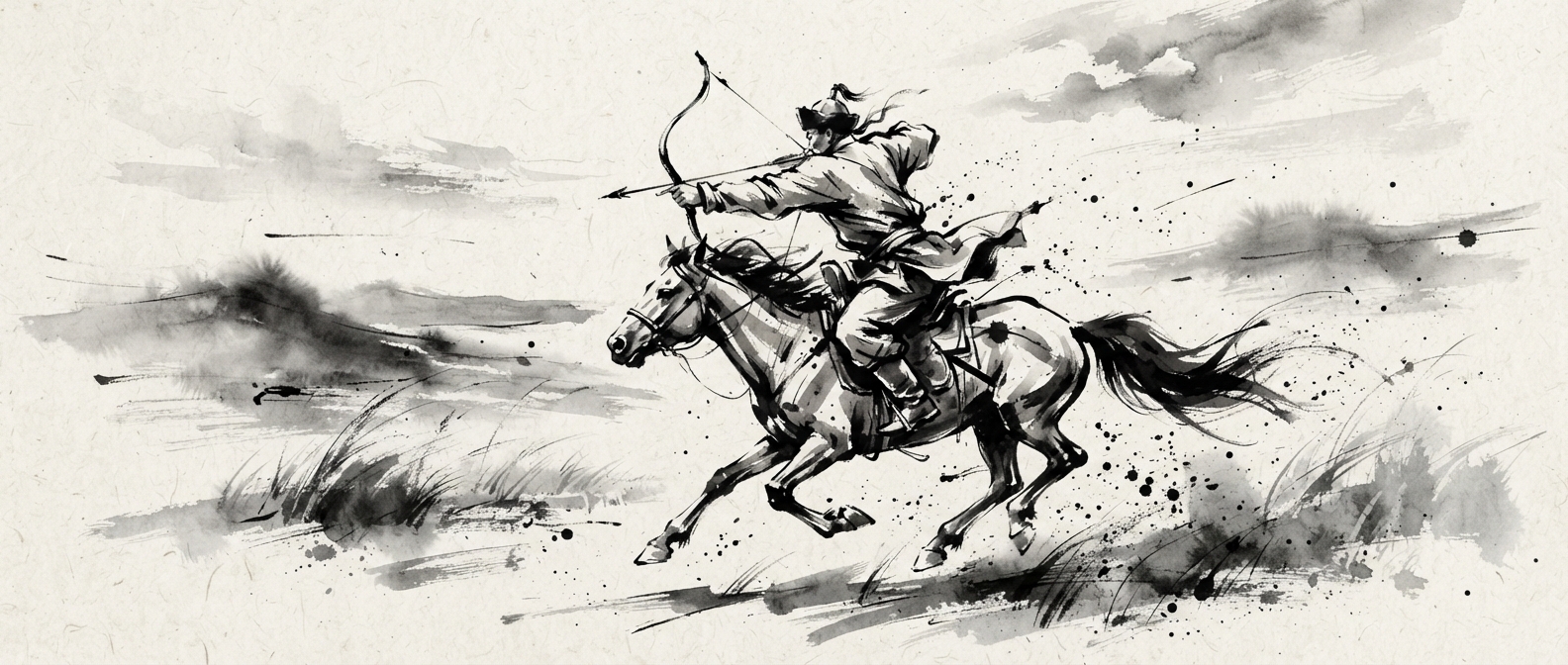

The Huns are linked in popular memory with the long, asymmetric, bone-plated bow. The scholarship is more careful.
Where the bone-plated bow came from
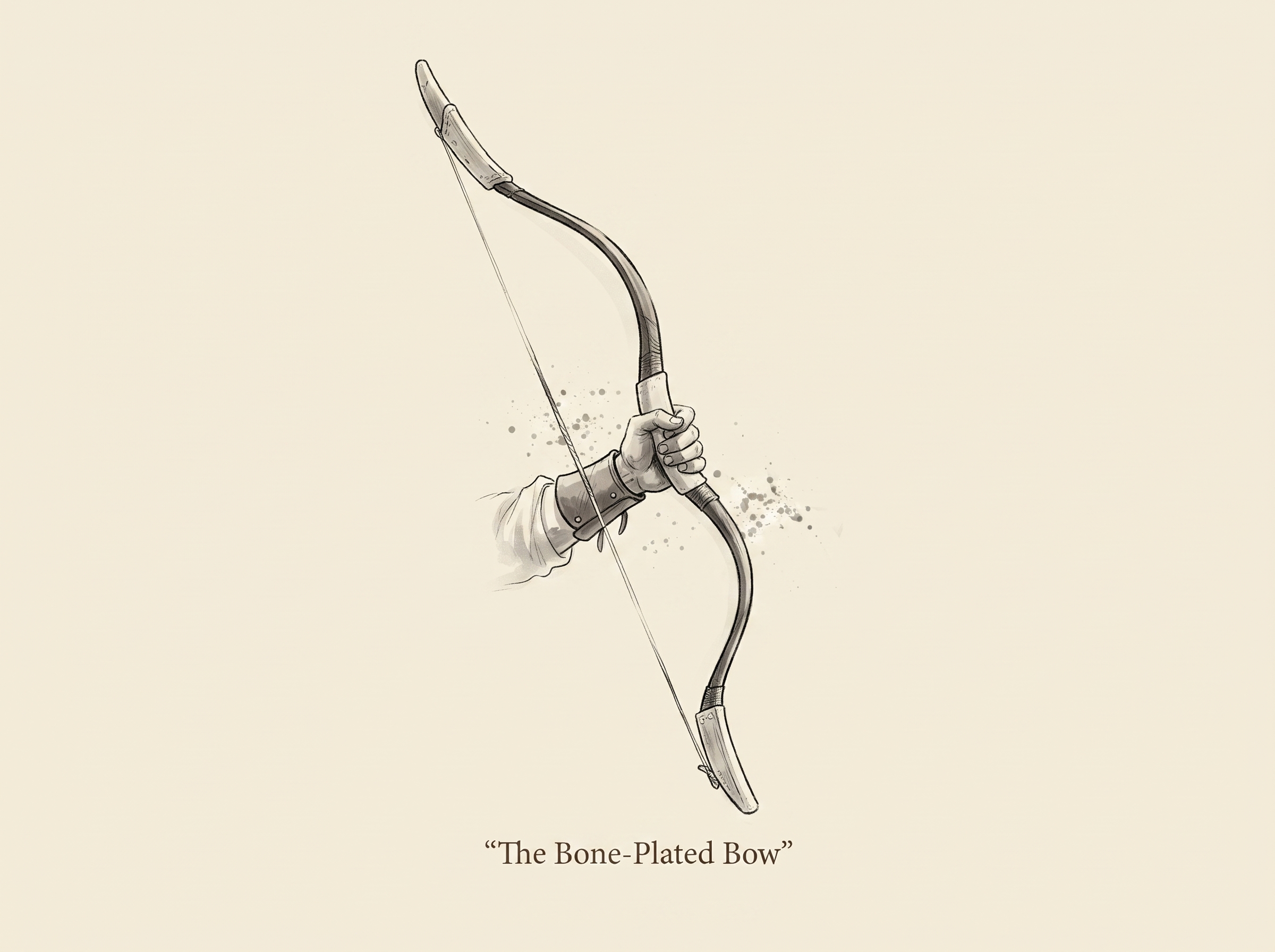
Khazanov dates the earliest bow plates to Transbaikalia around the turn of the era; short curved tips from the Tsepan river burial (8th–4th century BC) suggest an older Siberian tradition. Further finds come from Inner Mongolia and East Turkestan; the Kumdarya bow published by Bergman was 140–150 cm long. Bone-plated bows have also been found in Roman frontier forts, linked to eastern archers.
In the 1930s J. Werner and András Alföldi attributed the bone-plated bow to the Huns. Khazanov calls this categorical view unacceptable and argues for a development across the whole steppe: “one can speak only of Hunnic influence”.
Genetics

Maróti and colleagues analysed the genomes of 9 Hun-period, 143 Avar-period and 113 Hungarian Conquest-period individuals (Current Biology, 2022). The immigrant core groups of the Huns and the Avars probably came from present-day Mongolia and trace back to the Xiongnu; in all three periods most of the population was of local European origin.

Ammianus Marcellinus described the Huns as the most fearsome of warriors because of their archery. L. E. Fyfe’s thesis (Trent University, 2016) examines critically how much the “Hun archer” image really explains.