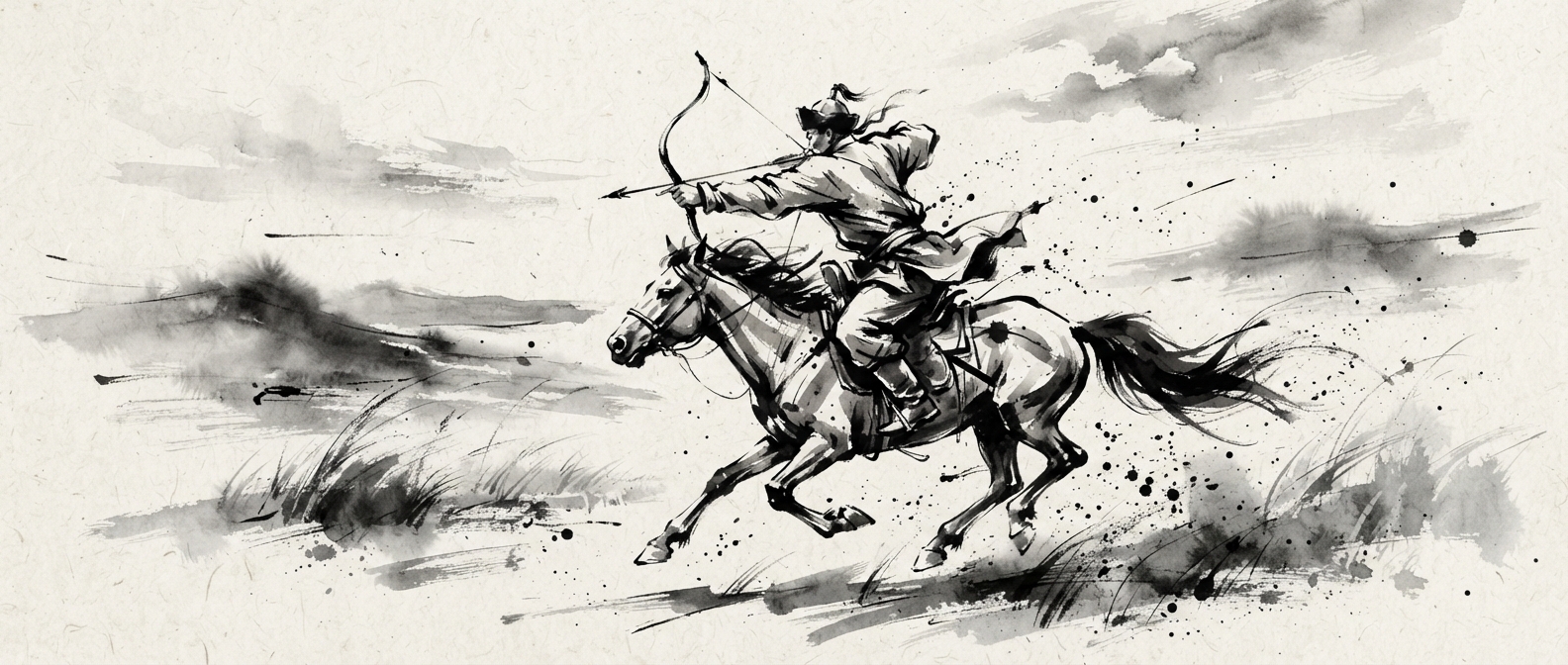
Most steppe and Asian archers drew the string with the thumb, protected by a ring or leather guard.
Two ways to draw
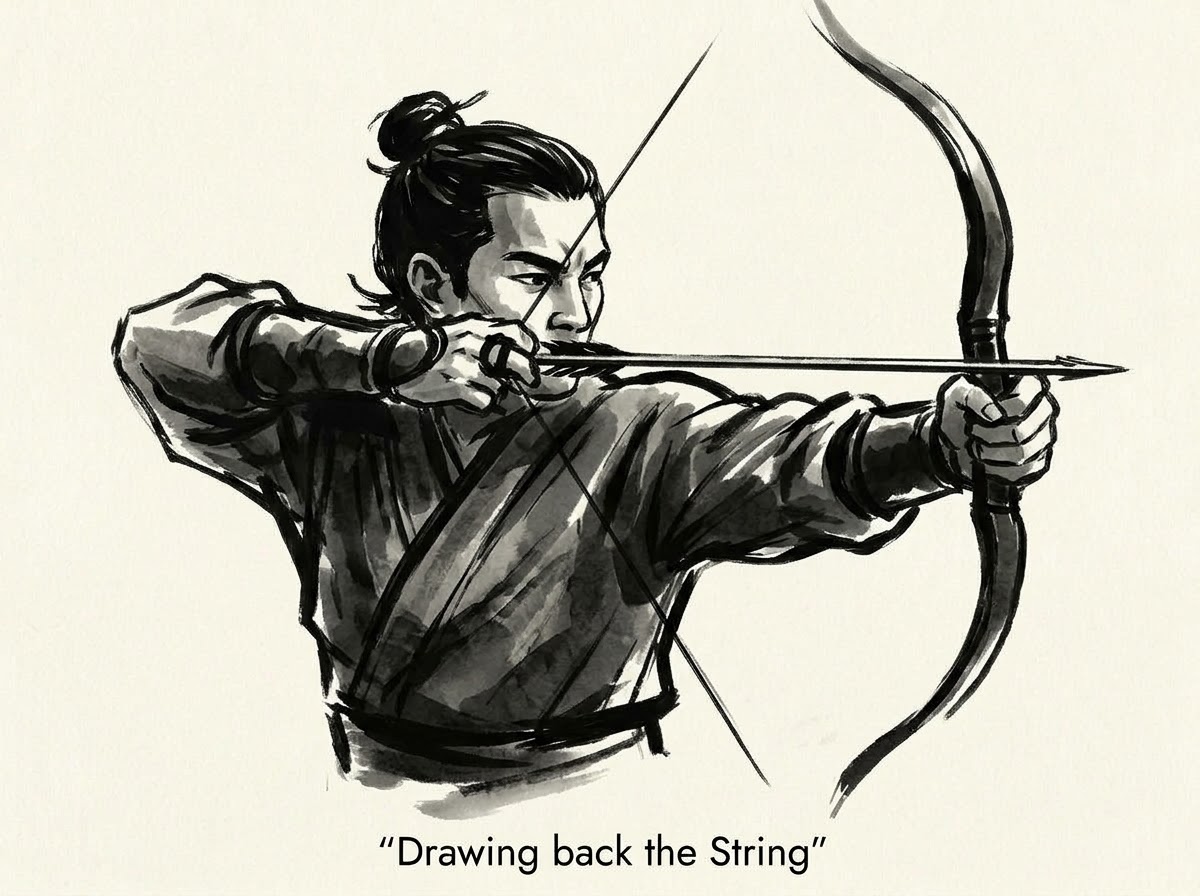
In the Mediterranean draw, three fingers hold the string and, for a right-handed archer, the arrow lies on the left of the bow. In the thumb (“Mongolian”) draw the thumb holds the string, locked by the index or middle finger, and the arrow lies on the right. It was used on the steppe, in Korea, China, Russia, Persia and Turkey; the Japanese torikake is a variant. According to a summary of E. S. Morse (1885), the index finger keeps the arrow on the bow while the horse moves, and short bows do not pinch the fingers.
The oldest rings
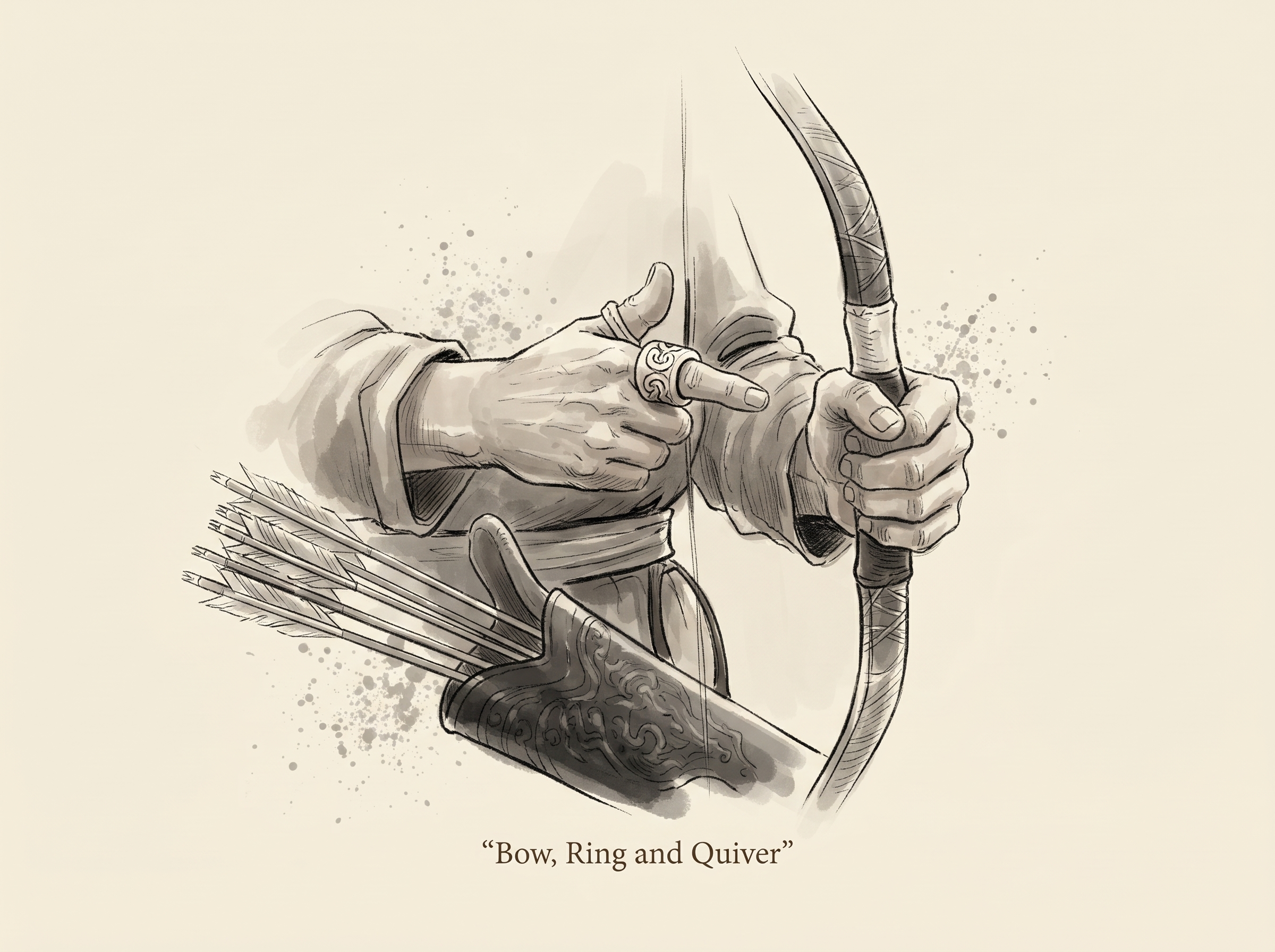
According to Bede Dwyer (1997), the earliest widely cited functional archer’s ring is the jade ring from the tomb of Fu Hao (Shang dynasty, Anyang), more than 3,000 years old. Lipped and tabbed rings appear in the Eastern Zhou and resemble later Near Eastern, Turkish and Persian rings. The Qing Manchu cylindrical ring holds the string at its lower edge.
The Ottoman zihgir was made of wood, metal, ivory, bone, horn or leather and later became a prestige object, some too ornate to shoot with.