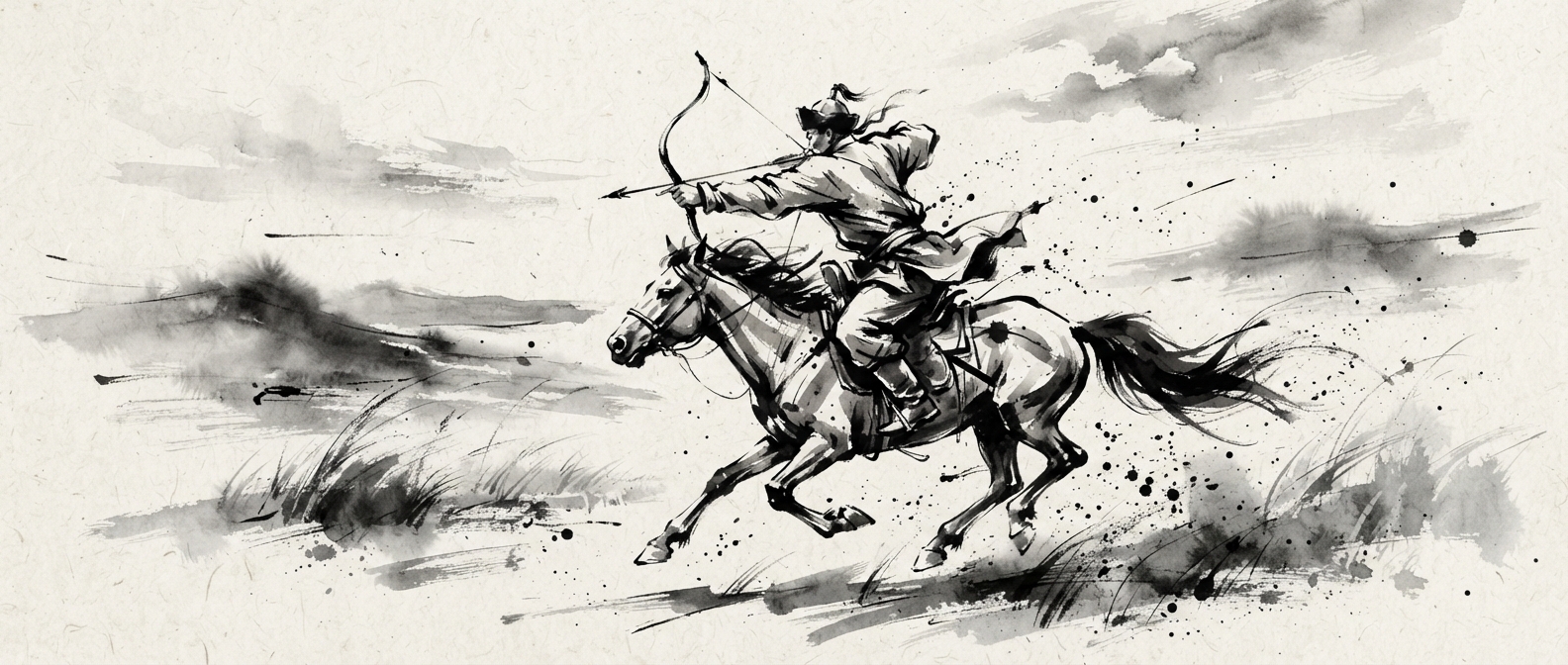
In Japan mounted archery survived as a hereditary ritual tied to Shinto shrines.
Yabusame
At Tsurugaoka Hachimangū in Kamakura the first yabusame was held in 1187 at the order of Minamoto no Yoritomo, dedicated to Hachiman, god of warriors. Riders gallop a 250 m course from east to west and shoot at three targets set on the south side, so that no one shoots towards the shrine. The Ogasawara school performs on 16 September, the Takeda school in April (Japan Tourism Agency).
According to an article by a disciple in a Japanese government magazine (2026), the Ogasawara-ryū counts more than 850 years and 31 generations of heads; it teaches etiquette, foot archery and mounted archery. Because the craft of making yabusame saddles has been lost, Edo-period saddles are used, one of them from 1664.
The three mounted arts
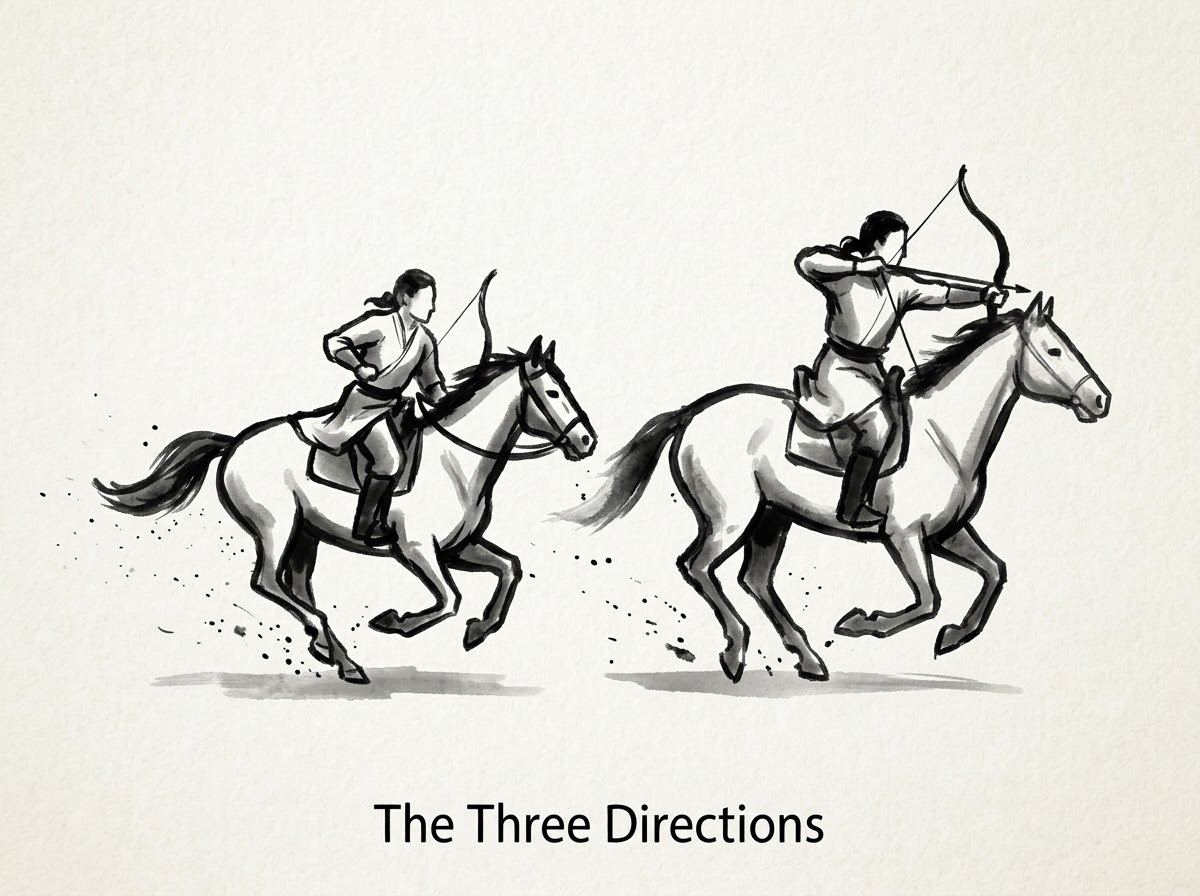
According to Wikipedia, the three arts of mounted archery are yabusame, kasagake and inuoumono. The word kasagake first appears in 1057. The arts declined after the fall of the Kamakura shogunate and were revived under Tokugawa Yoshimune by Ogasawara Tsuneharu; a ritual kasagake is still held at Kamigamo Shrine in Kyoto.