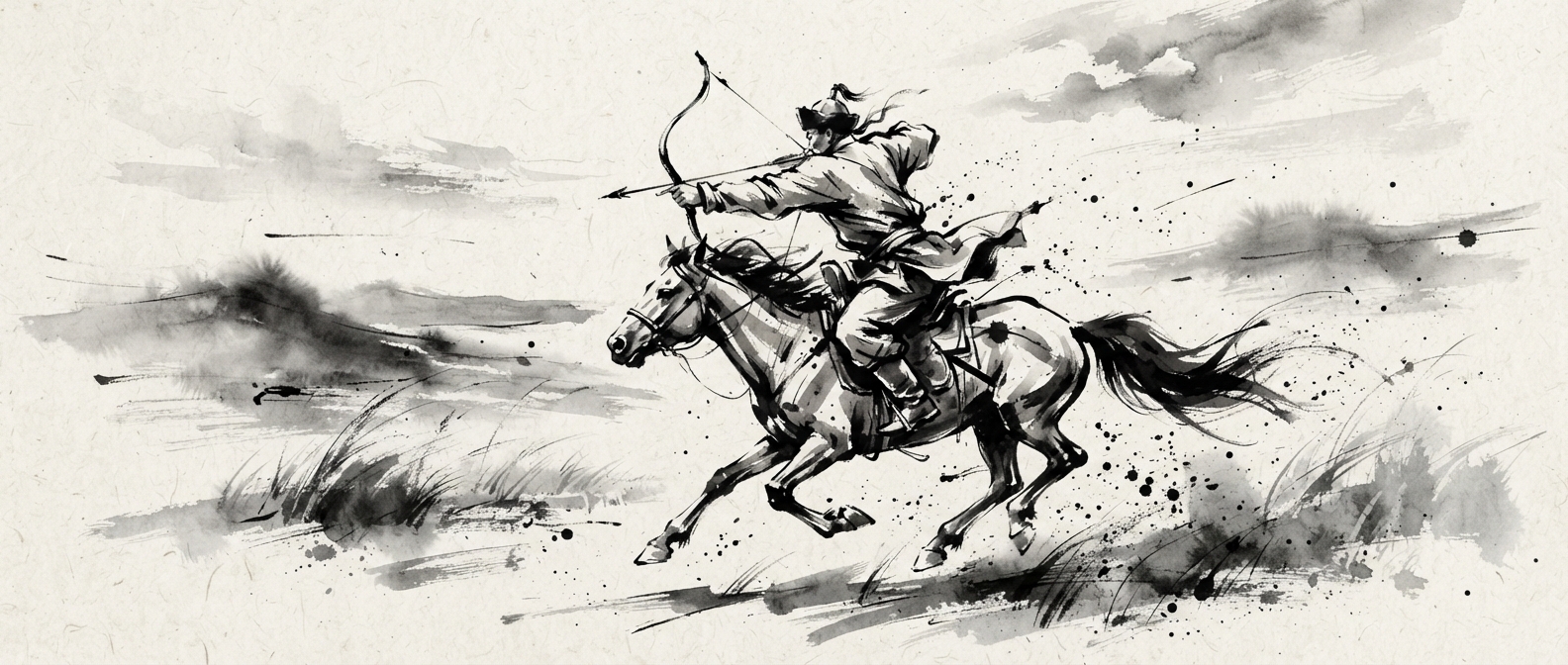
The Islamic world produced the richest written literature on horsemanship and archery, known as furusiyya.
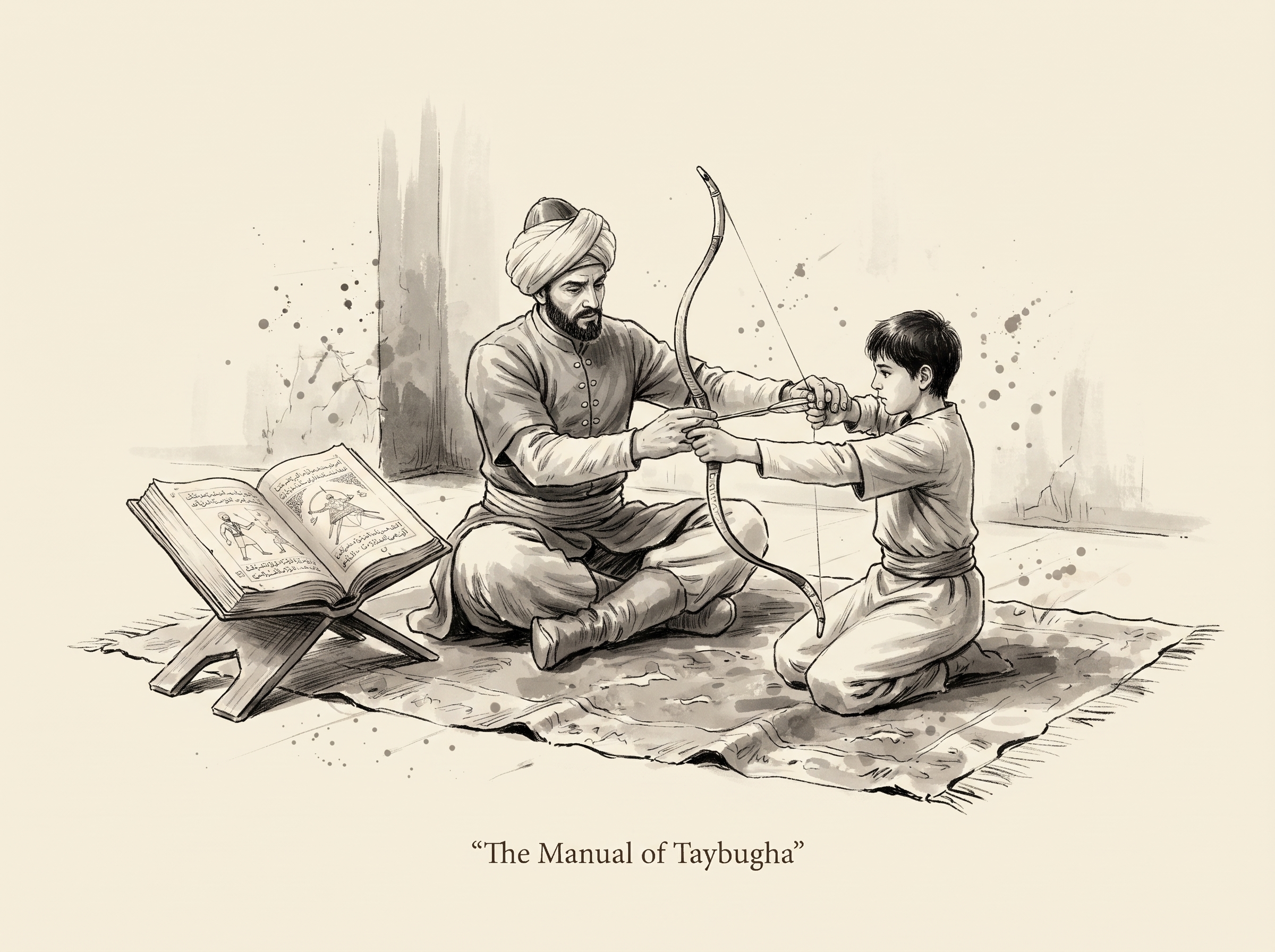
Taybugha’s manual
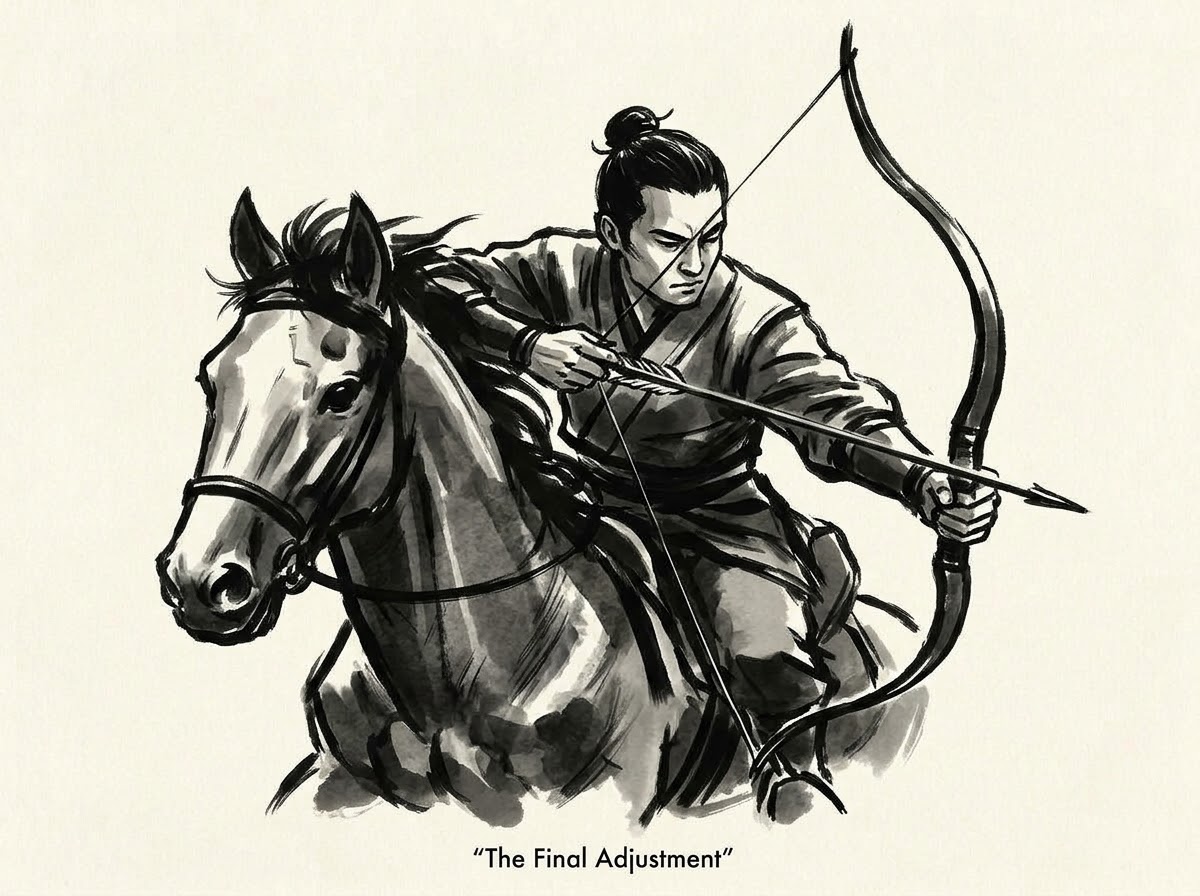
According to J. D. Latham (1969), Taybugha’s Ghunyat al-tullab fi ma‘rifat al-ramy bi-l-nushshab was written around 1368 as a didactic poem with prose commentary for Sultan al-Ashraf Sha‘ban; at least 17 manuscripts survive. Latham calls it a technical treatise for training archers that “stands up to expert scrutiny”. Its English translation is Latham and Paterson’s Saracen Archery (1970). A practising archer’s review describes its sections on shooting from horseback, controlling the horse with heel, knee, calf and rein, aiming to the rear and the thumb draw.
Ibn Akhi Hizam
British Library Add MS 20736, a 16th-century Arabic manuscript, belongs to the tradition of the Abbasid furusiyya master Ibn Akhi Hizam (died about 864). Its chapters cover the lance, archery, riding, horse care, the mace, the shield and the sword, and among its illustrations is a target for shooting from horseback.
Arab Archery
Faris and Elmer’s Arab Archery (Princeton, 1945) translates an anonymous, probably Moroccan treatise, which the translators date to about 1500; Wikipedia dates it to 1350–1400. Sources disagree here. Wikipedia, following Jallon (1980), lists further treatises by al-Tarsusi, al-Tabari, al-Yunini and Ibn Qayyim al-Jawziyya.
The qabaq
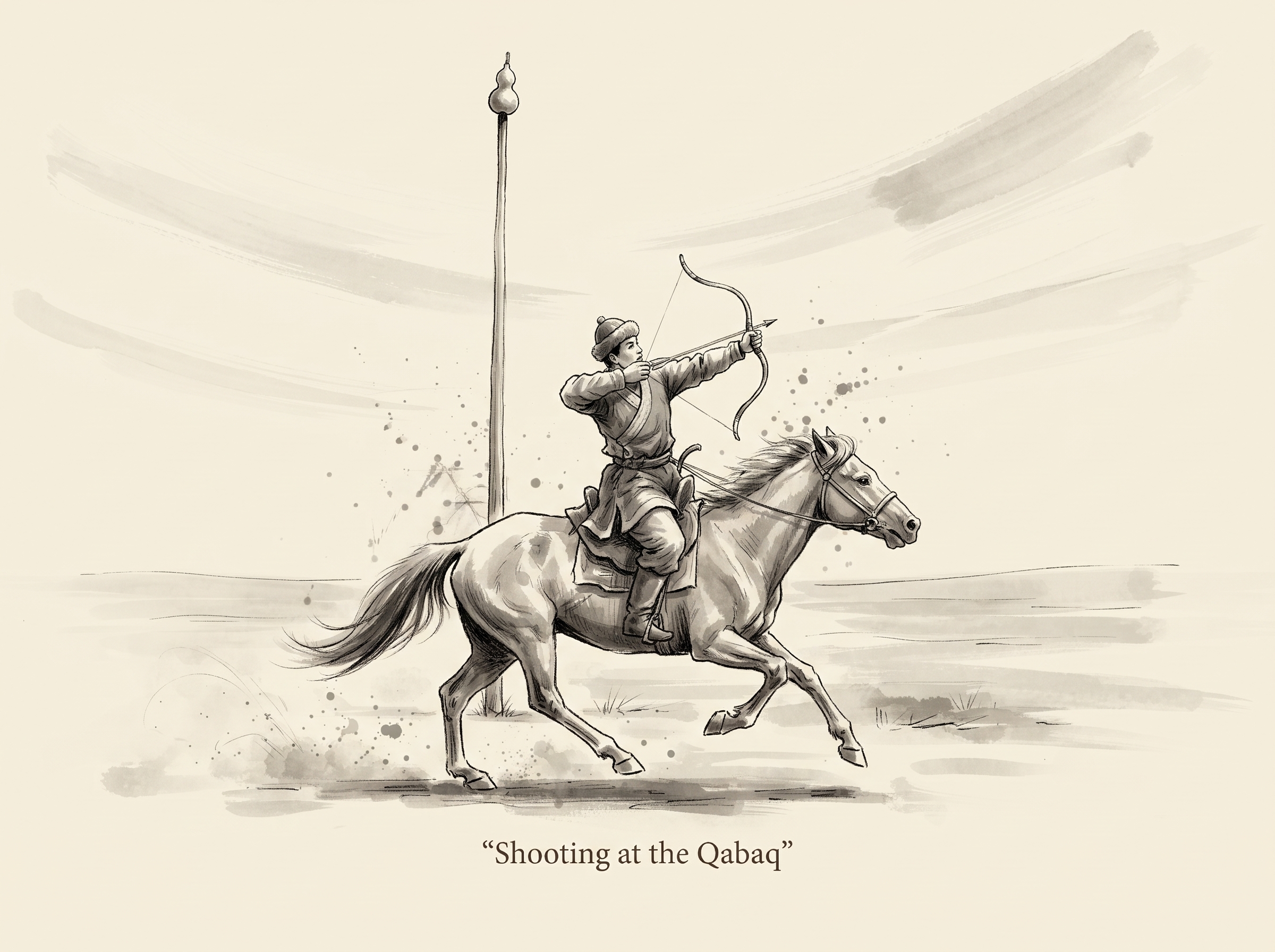
The Mamluk qabaq is a tradition often cited by modern rule systems: American courses are said to include a “Persian (qabaq)” style, and IHAA ran a “Mamluk” track in 2014. A scholarly study, “Sports as Performance: The Qabaq-game and Celebratory Rites in Mamluk Cairo”, exists on Academia.edu.