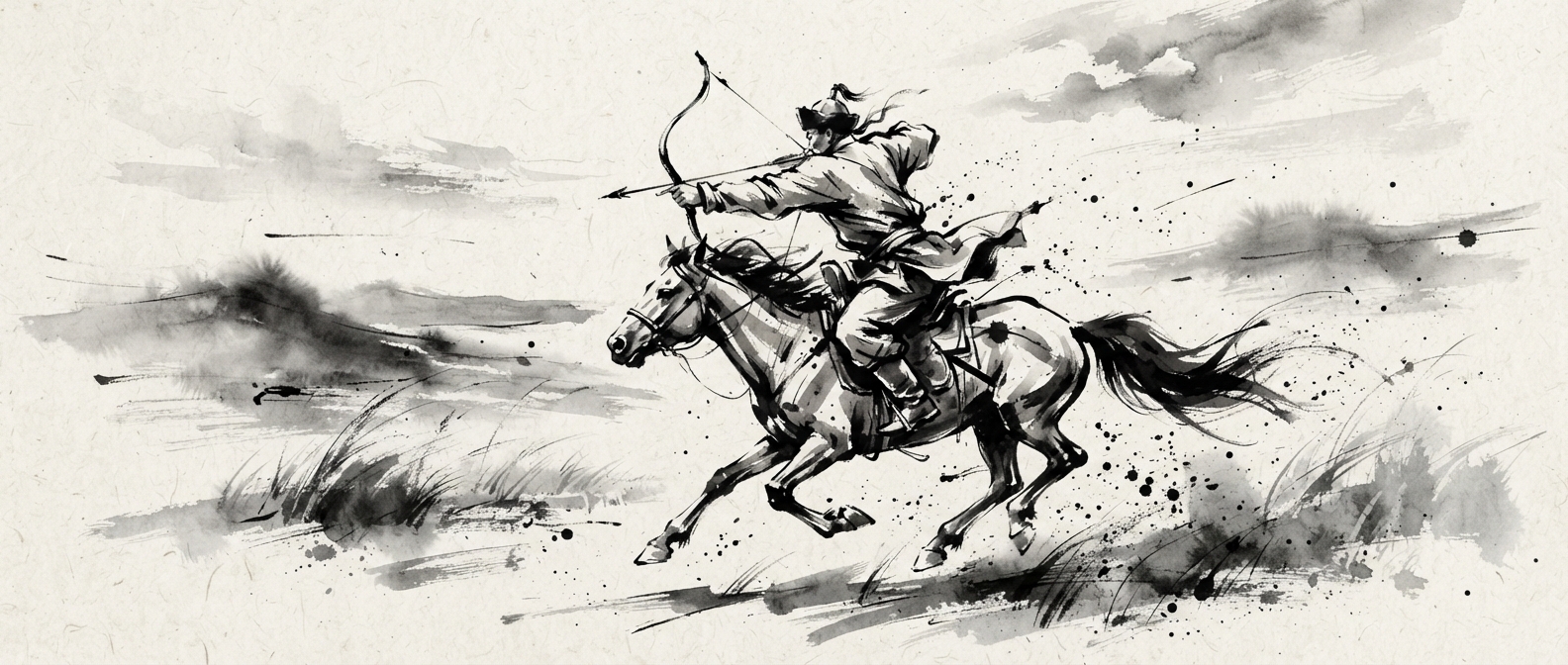
The phrase “Parthian shot”, a shot fired backwards while riding away, comes from the Roman experience of Parthian horse archers.
What the ancient writers said
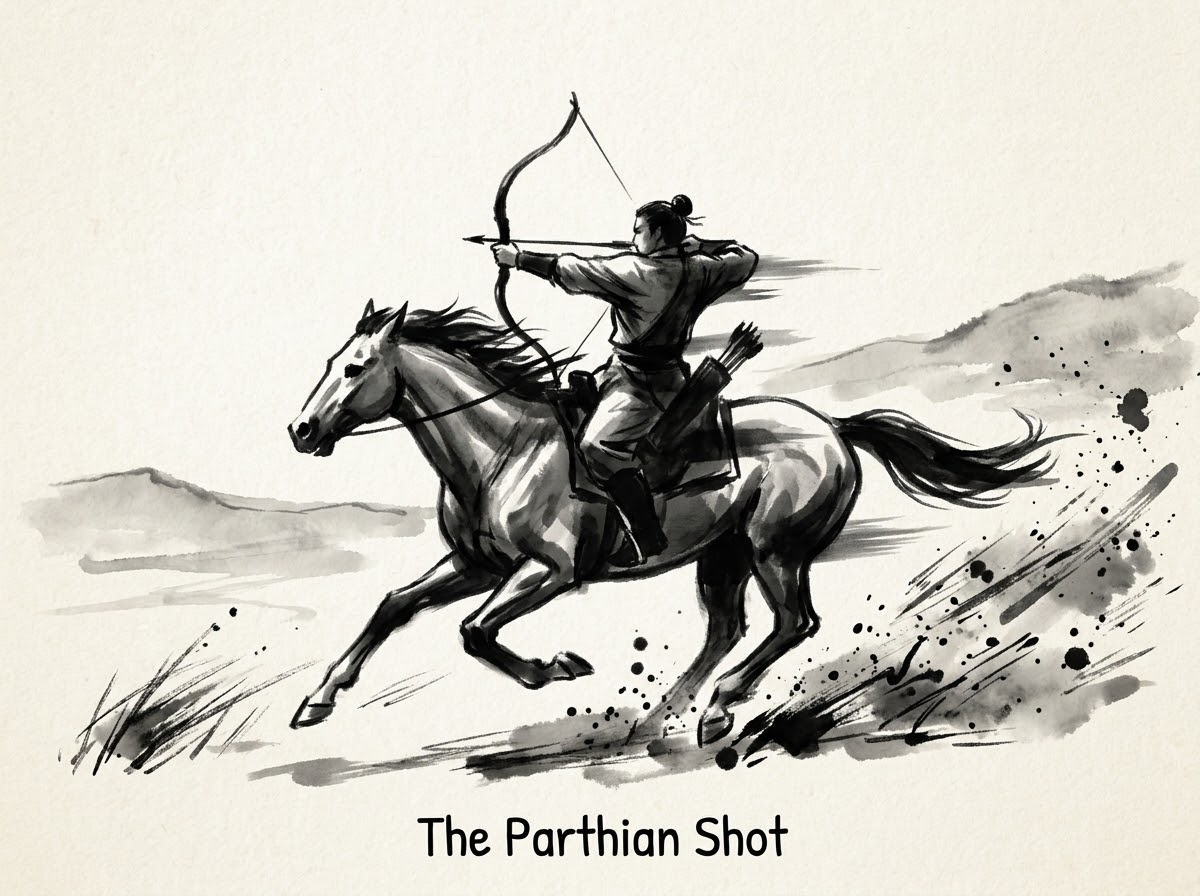
Plutarch’s Life of Crassus (24–25) states that the Parthians shot while fleeing, and did it more effectively than anyone but the Scythians; their bows were “large and mighty”, their horses covered with plates of bronze and steel, and camels loaded with arrows kept them supplied. Cassius Dio (40.22) stresses cooperation: when the Romans dodged the lancers, the arrows found them.
Carrhae, 53 BC
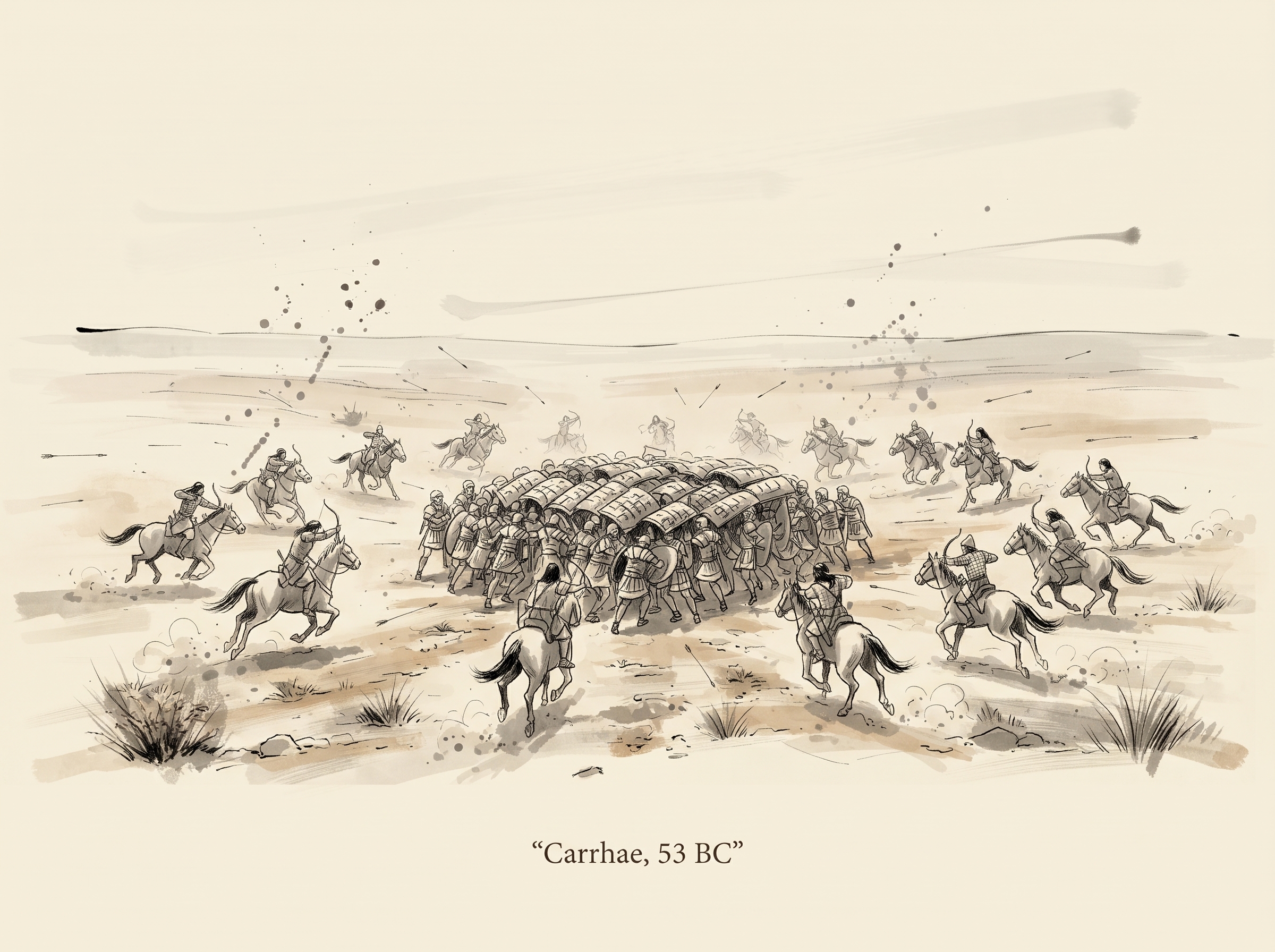
According to A. Sh. Shahbazi (Encyclopaedia Iranica), Surena’s army had about 10,000 horsemen, about 1,000 armoured lancers (cataphracts) and 9,000 horse archers, with 1,000 camels carrying arrows. A feigned retreat drew Publius Crassus’s Gallic cavalry away from the main army, where they were surrounded. Of about 42,000 Romans, about 10,000 returned to Syria and about 10,000 were captured and settled at Marv. Shahbazi rejects the old explanation that Crassus’s incompetence alone lost the battle, and notes that after Carrhae Rome adopted Parthian-style cavalry.
Sasanian silver
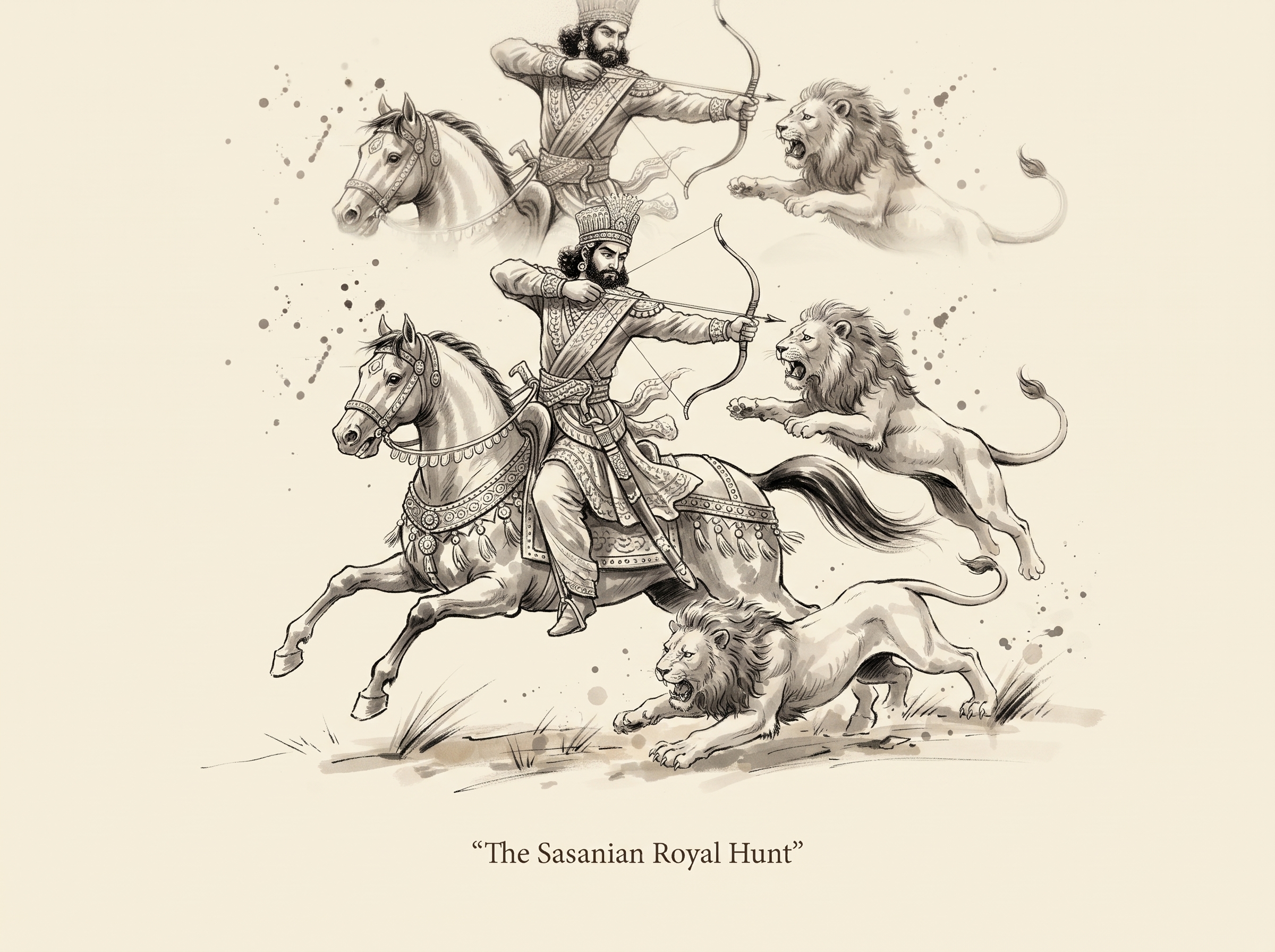
Farrokh, Khorasani and Dwyer (2018) studied 22 Sasanian and early post-Sasanian silver plates. Mounted archery is the largest group, with four sub-types: shooting forward, the backward Parthian shot, archery with stirrups, and riders who appear to face backwards. All plates show hunting scenes, which the authors connect to warfare.

According to Wikipedia, citing Daryaee, Zakeri, Farrokh and Bivar, Islamic-era sources list the equipment of a Sasanian cavalryman after the reforms of Khosrow I: helmet, mail, horse armour, lance, sword, shield, axe, mace, a bow case with two bows, a quiver of 30 arrows and spare strings. The Middle Persian text Khusraw and his Page lists riding and shooting among a page’s accomplishments.