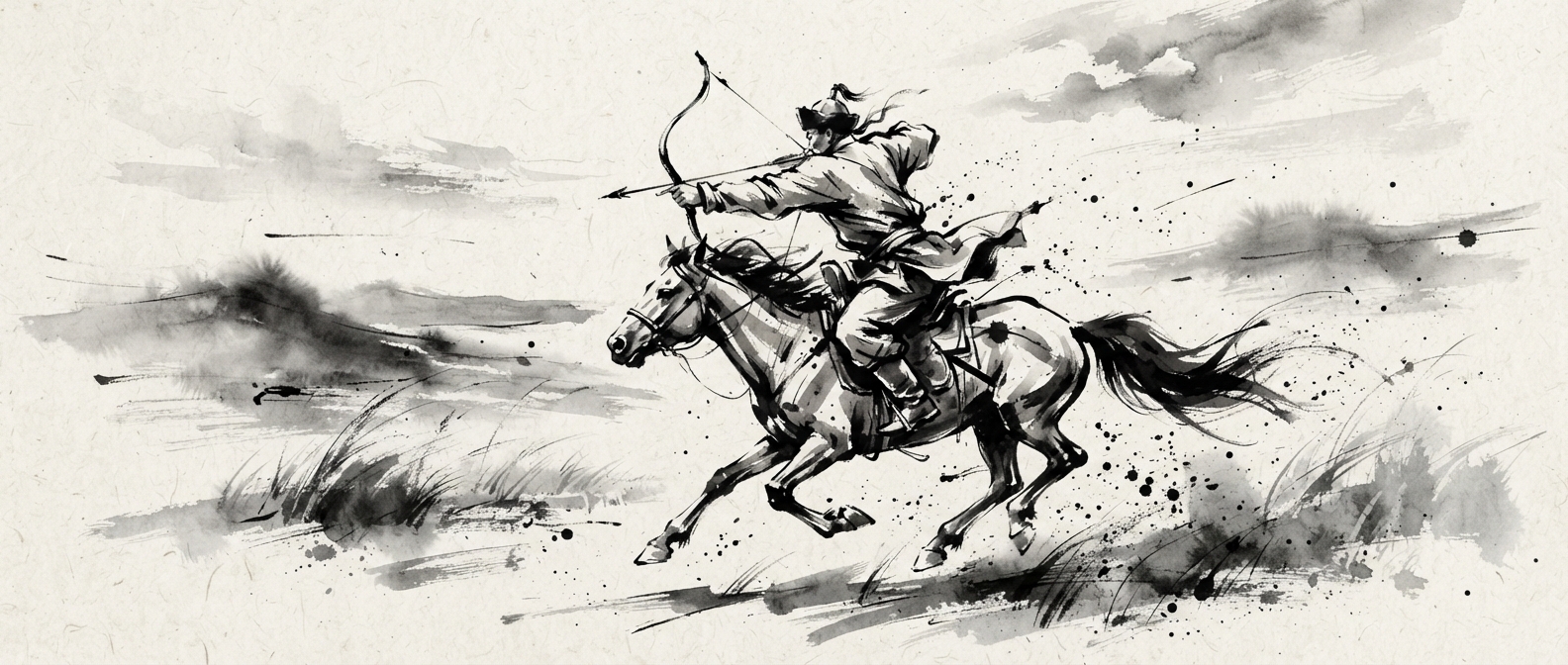
“The horse archer was the basic element of the Mongol art of war,” writes historian Timothy May.
Range and tactics
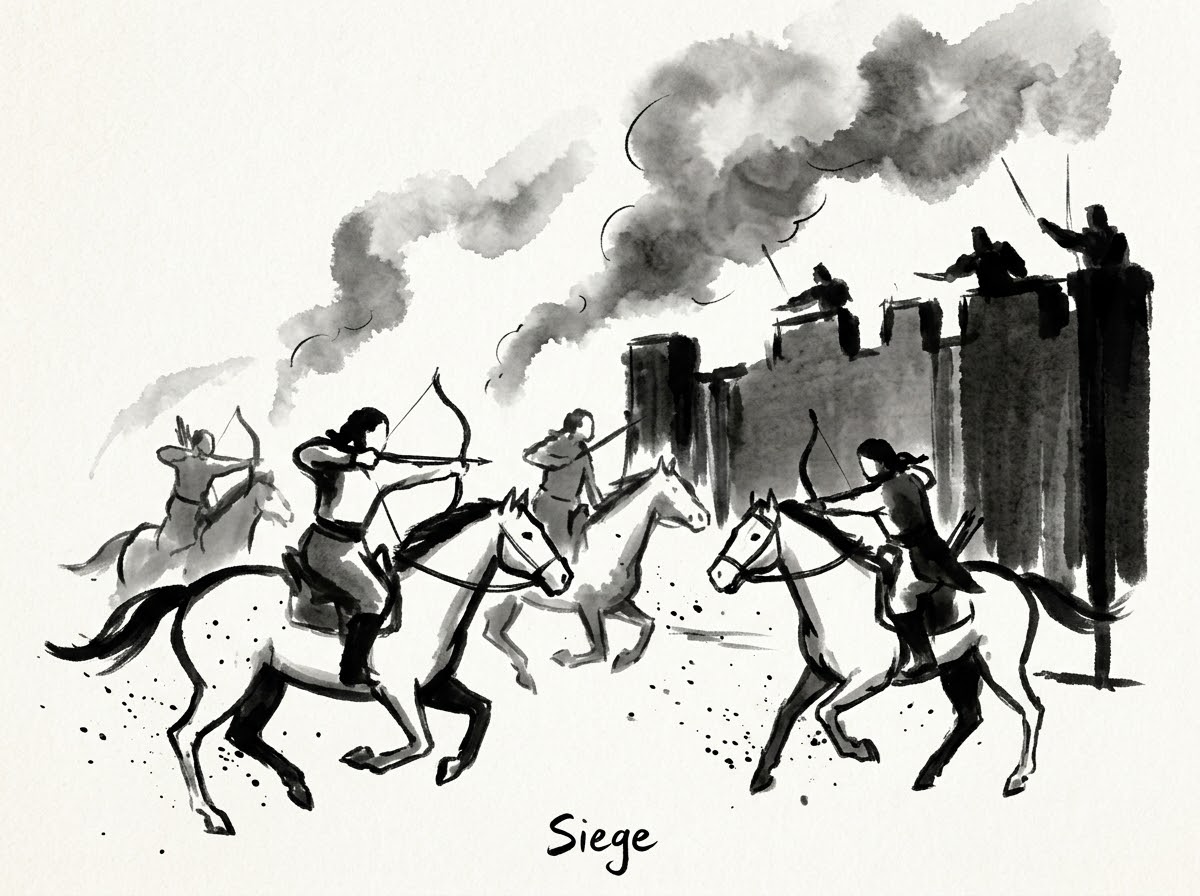
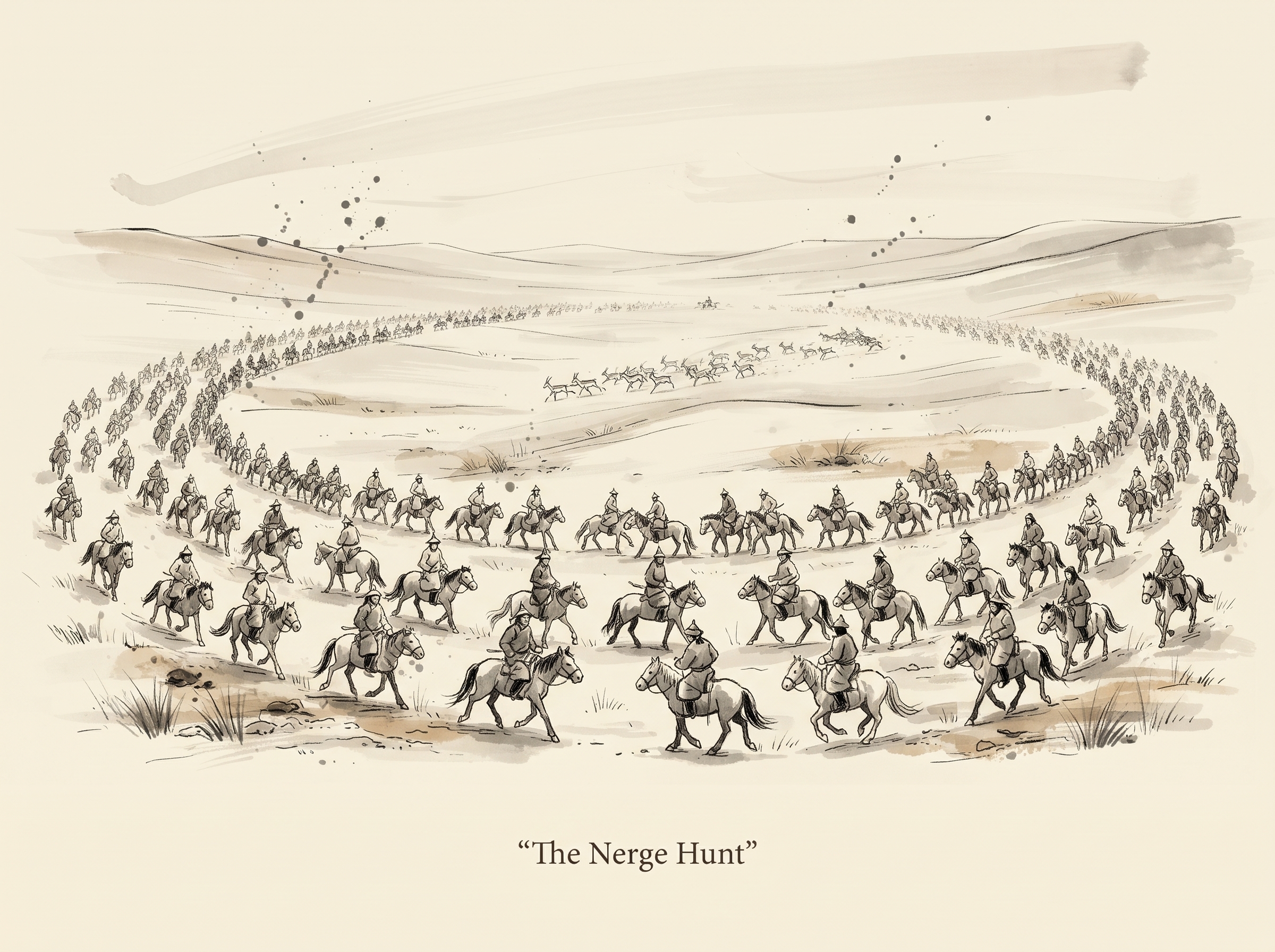
May notes that the double-recurved composite bow could reach well over 300 m, but warriors usually shot much closer to pierce armour. He describes the arrow storm, high-arcing volleys into a chosen killing zone; the shi’uchi or “chisel” wave attack, in which the last arrow was loosed at about 40–50 m before the riders wheeled away; the feigned retreat; and the nerge, an encirclement drawn from the great hunt, illustrated by the gap deliberately left at the battle of Mohi in 1241. An average warrior had three to five horses.
In May’s view Chinggis Khan did not invent these methods; he extended and refined steppe practice, for example the decimal organisation of the army.
Naadam archery is not mounted
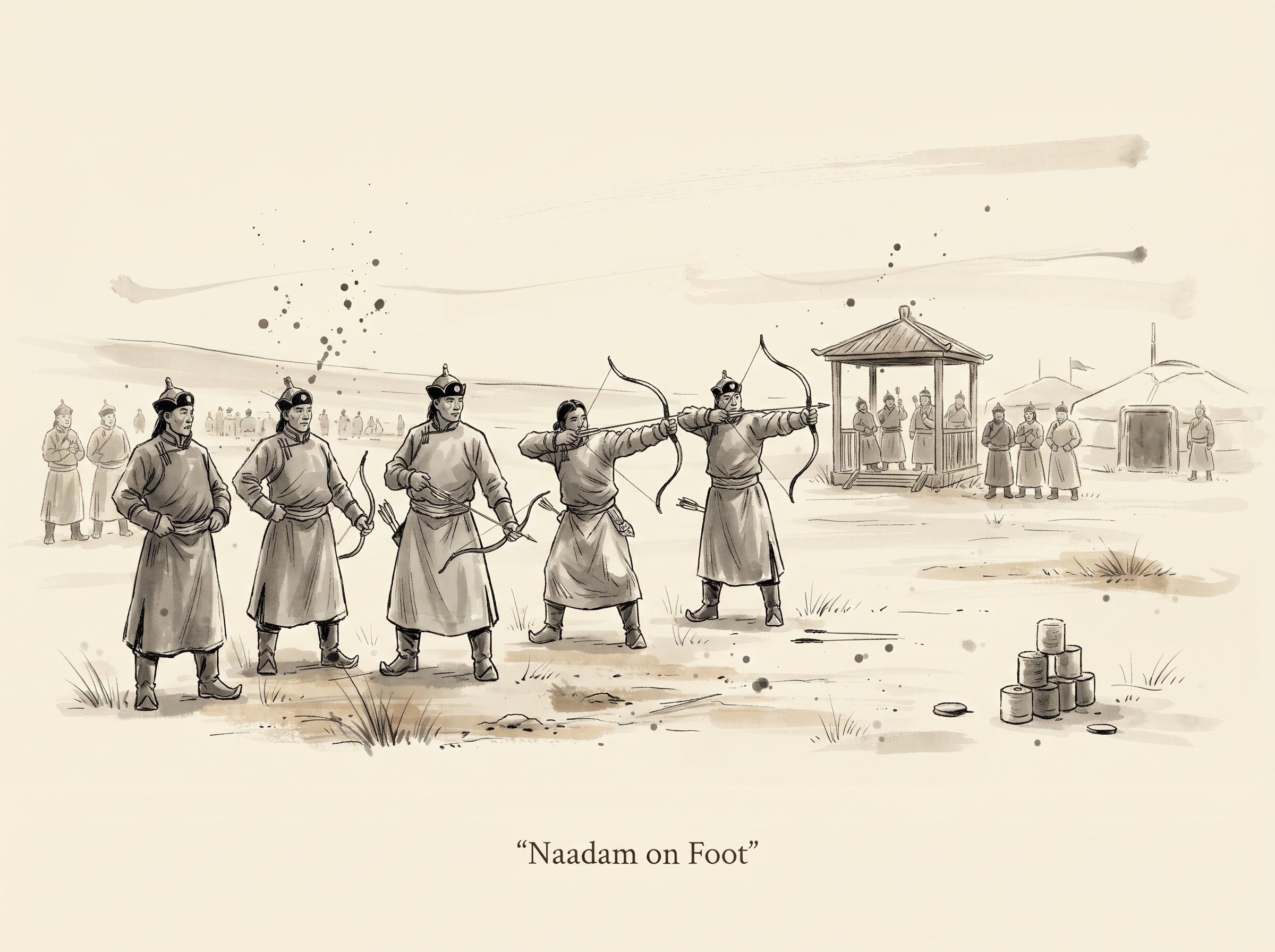
The archery of the Mongolian Naadam festival (sur kharvaa) is shot on foot at small 8 × 8 cm leather cylinders. Distances depend on style: Khalkh men 75 m and women 65 m, Buriad 45 and 30 m, Uriankhai 40 m. Judges signal a hit with raised palms and the cry “uukhai”. A horn bow takes 6–12 months to make. Naadam is on UNESCO’s list since 2010. It is a living descendant of steppe archery culture, but not of mounted warfare.

According to Wikipedia, mounted archery was revived in Mongolia after 1921 but remains very limited there today. Mongolia hosted the 17th WHAF World Championship in 2025.