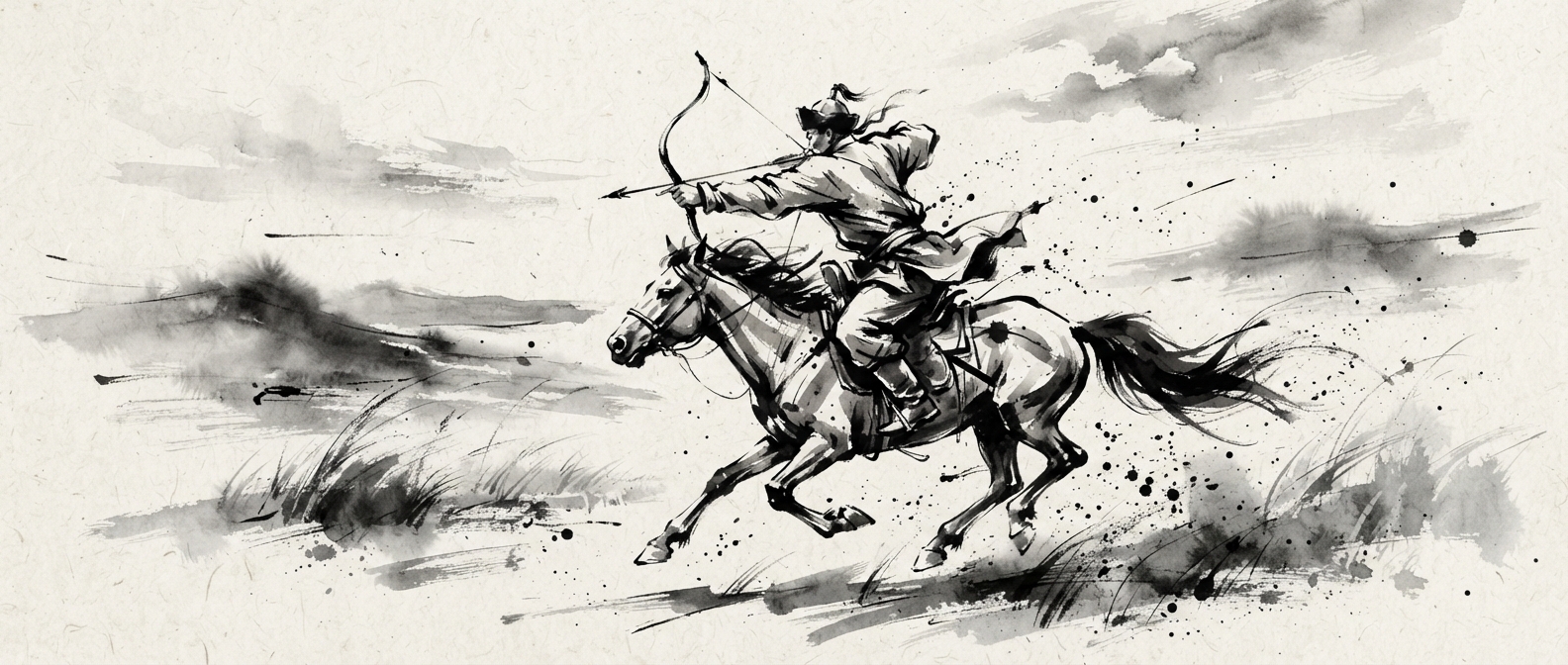
The steppe bow is a composite: a wooden core, horn on the belly, sinew on the back, glued with animal glue, often with rigid ends.
The Hun-type bow
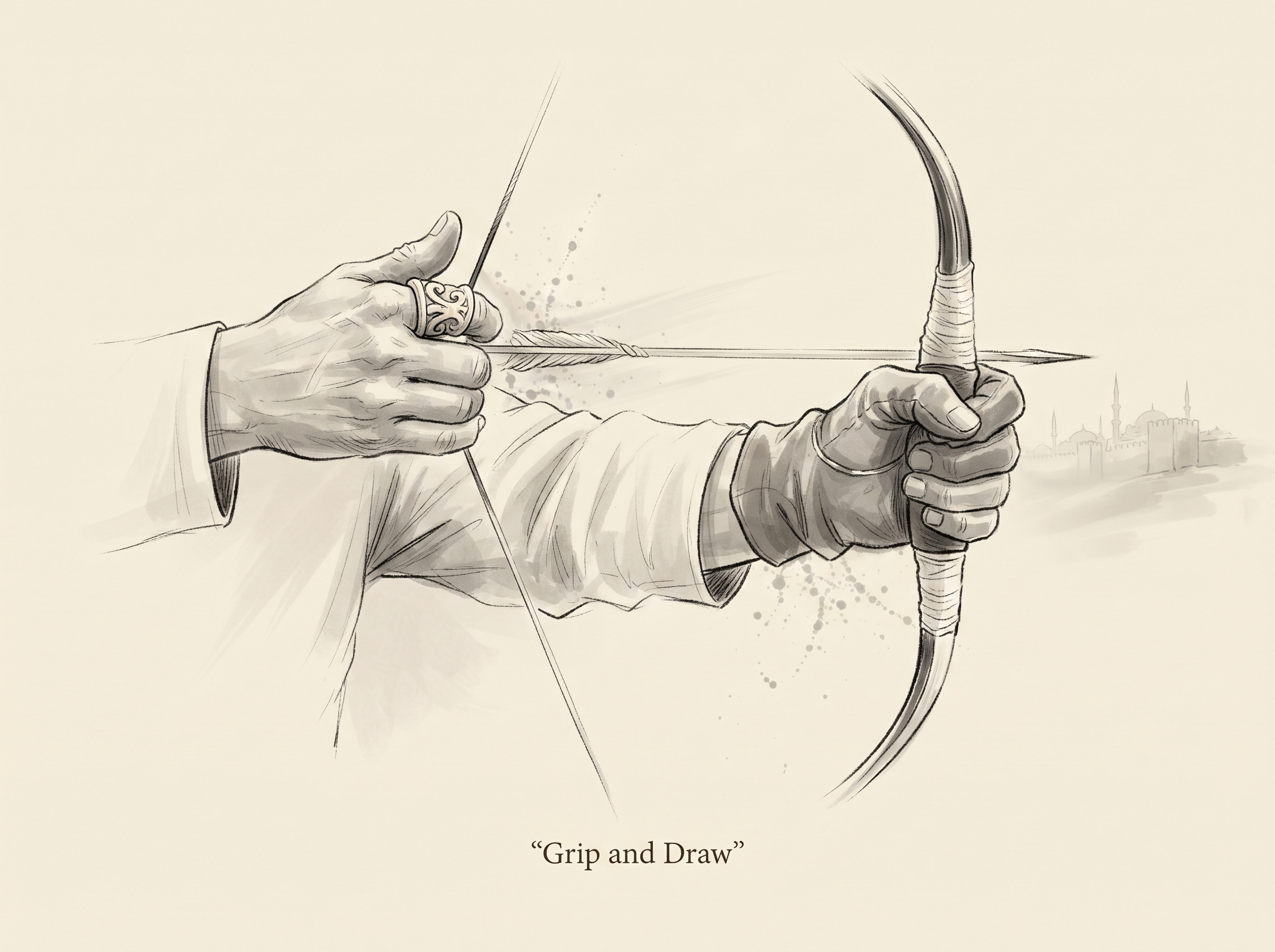
Khazanov describes the Hun-type bow as wood, horn, sinew and bone plates, with a classic set of seven plates: two pairs at the ends and three at the grip. Different lengths of the end plates make it asymmetric; overall it was 120–160 cm long.
How bows changed, 4th–14th century
Türk, Wilhelm and Paku (2024) trace the changes from an experimental archaeology perspective. The grip and ear plates common from the Hun period became smaller by the 9th–10th century. Overlapping joints gave way around the 10th century to V-shaped spliced ears, which may have reduced the need for plates; from the Mongol period only V-splices appear and the sinew bandaging disappears. Their suggested explanation, which they themselves present as interpretation: natural glues hold shear well but tension badly, and plates glued across the joint turn tension into shear. At least a dozen well-preserved 8th–11th-century bows are known from Russia, Kazakhstan and Mongolia.
What the physics says
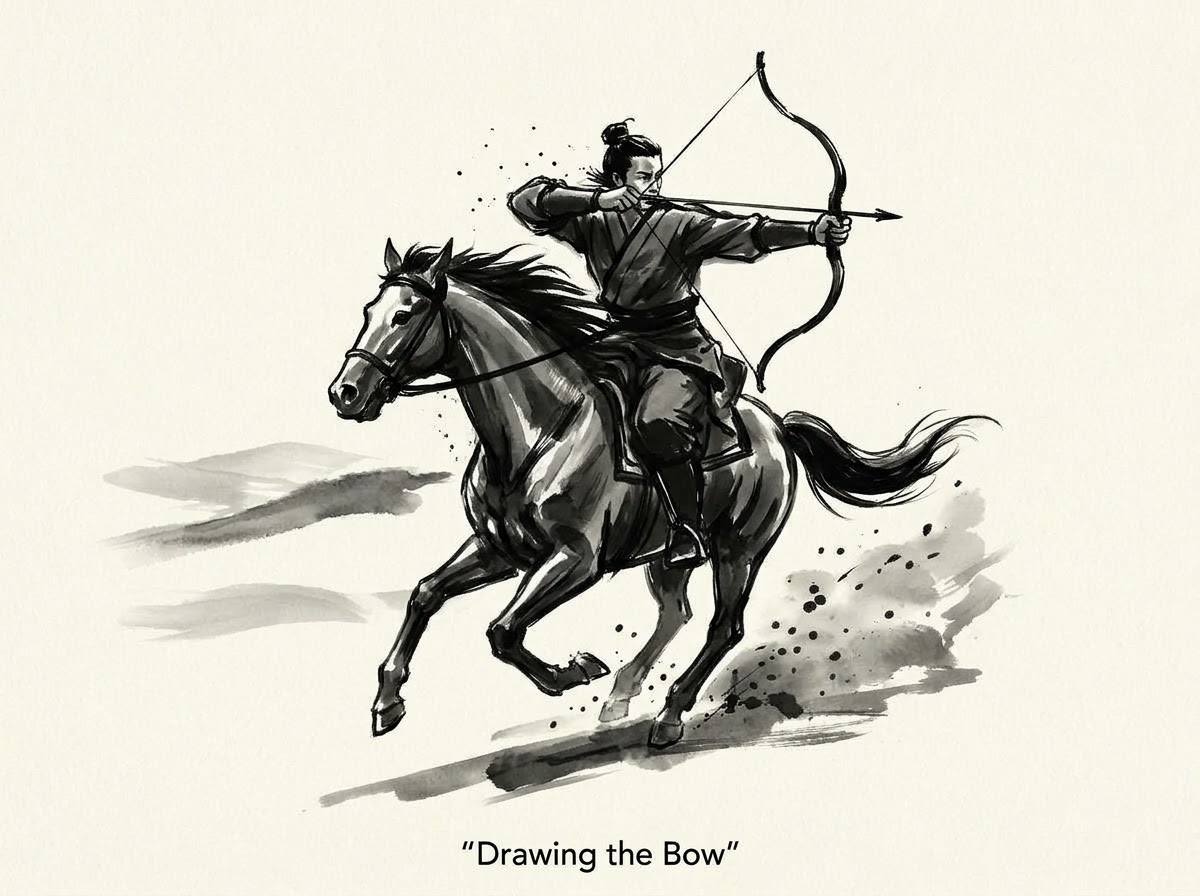
B. W. Kooi’s mathematical model (1983) found that short angular and static-recurve bows “do not have a better inherent performance than the long straight bow”. Asian composite bows store more energy per unit of limb mass, but much of it is already stored in the strung bow; heavy rigid ears reduce efficiency. Their strength was excellent materials and a short length that suited the saddle.
Reconstructions of historical horse bows are available at classic-bow.com.