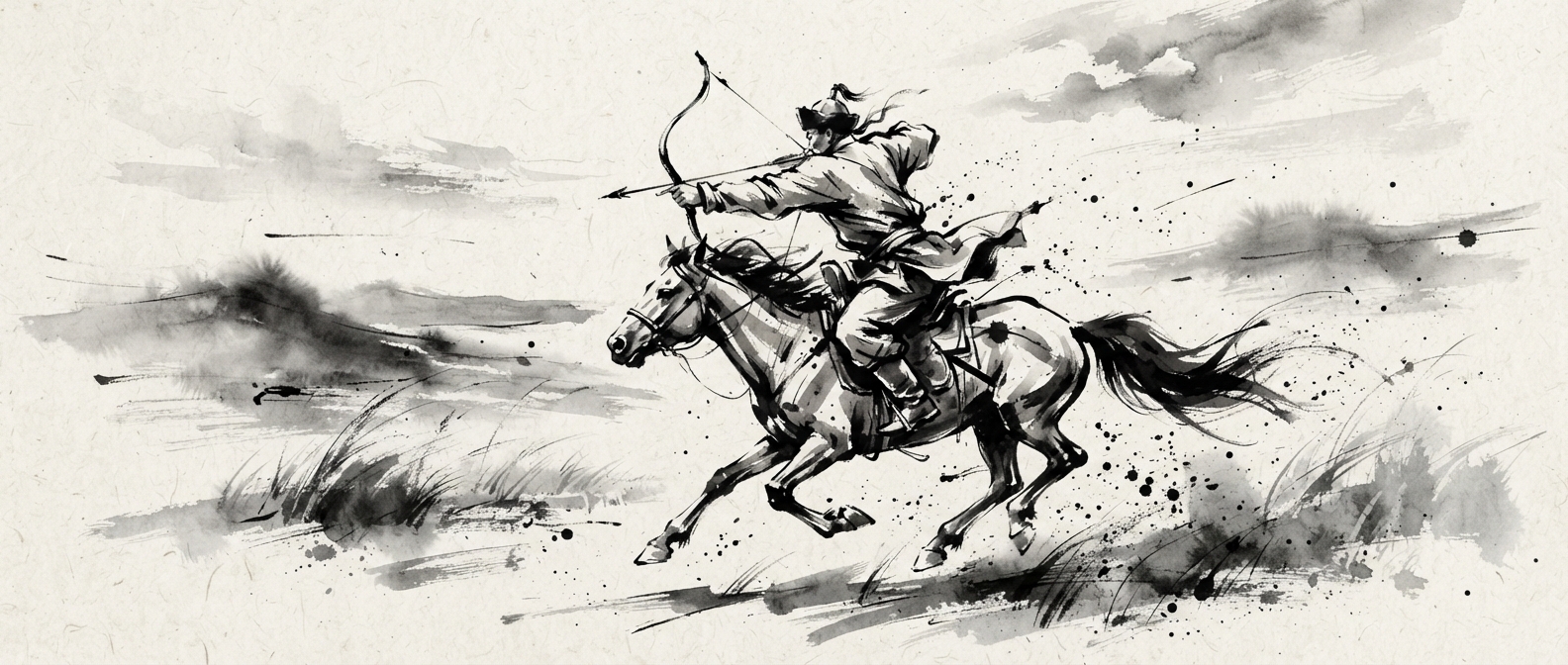
How a rider carries bow and arrows decides how fast he can shoot.
From gorytos to two cases
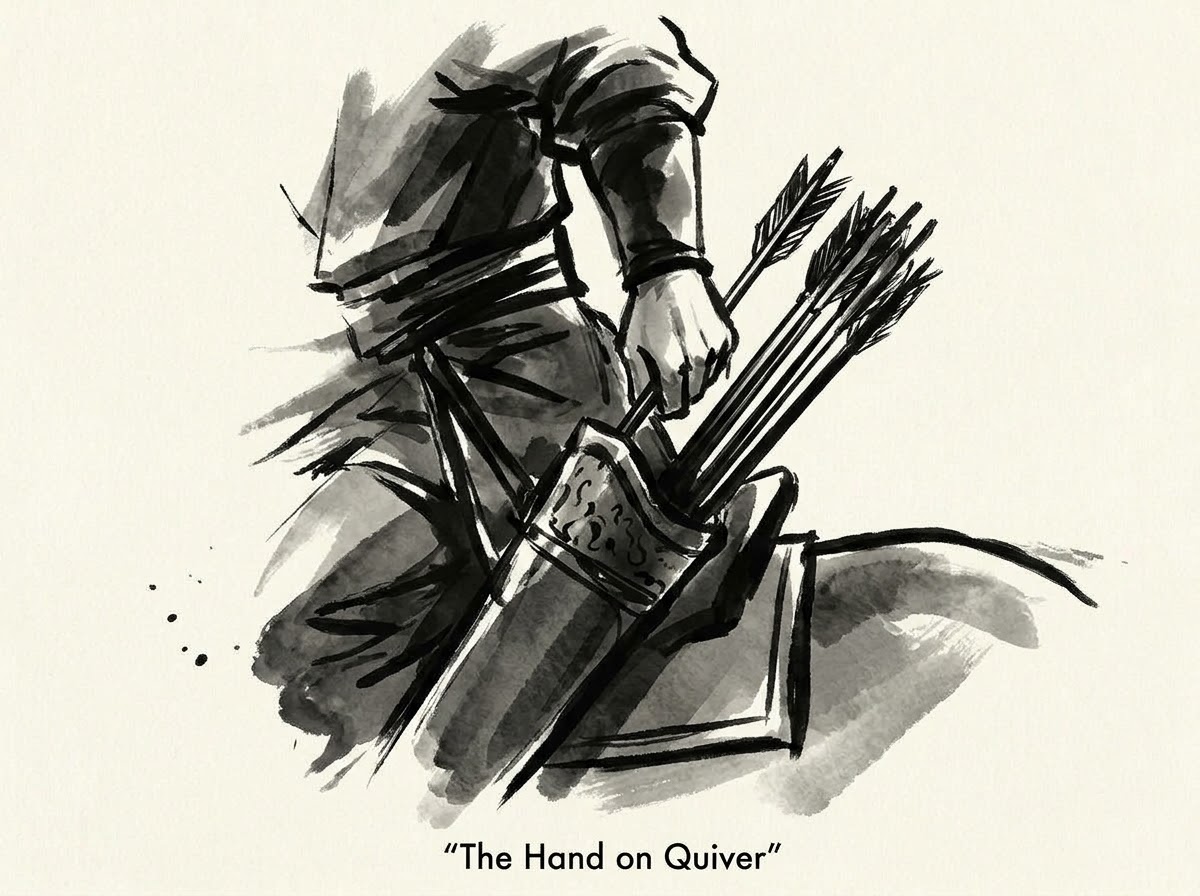
According to Türk, Wilhelm and Paku (2024), Scythian-period horse archers wore a combined gorytos on the left hip. From the Hun period the arrow quiver moved to the right side and a narrow, sack-shaped case for the unstrung bow to the left. A case holding a strung bow became common only in the 9th–10th century; Hungarian use is proven by grave II/52 at Karos-Eperjesszög, which held both types.
Hungarian arrows
Tibor Marx classified about 1,000 known 10th-century arrowheads into types A–F; type A, a short deltoid, is the most common. Heads were 50–140 mm long and weighed 12–20 g. Quivers were 70–86 cm long and held about 15–20 arrows, points up.
Scythian arrows
The Arzhan 2 royal grave contained three-bladed iron arrowheads decorated with gold, painted wooden shafts and a gold quiver.